
Read the older walking guide alongside today’s city information. |
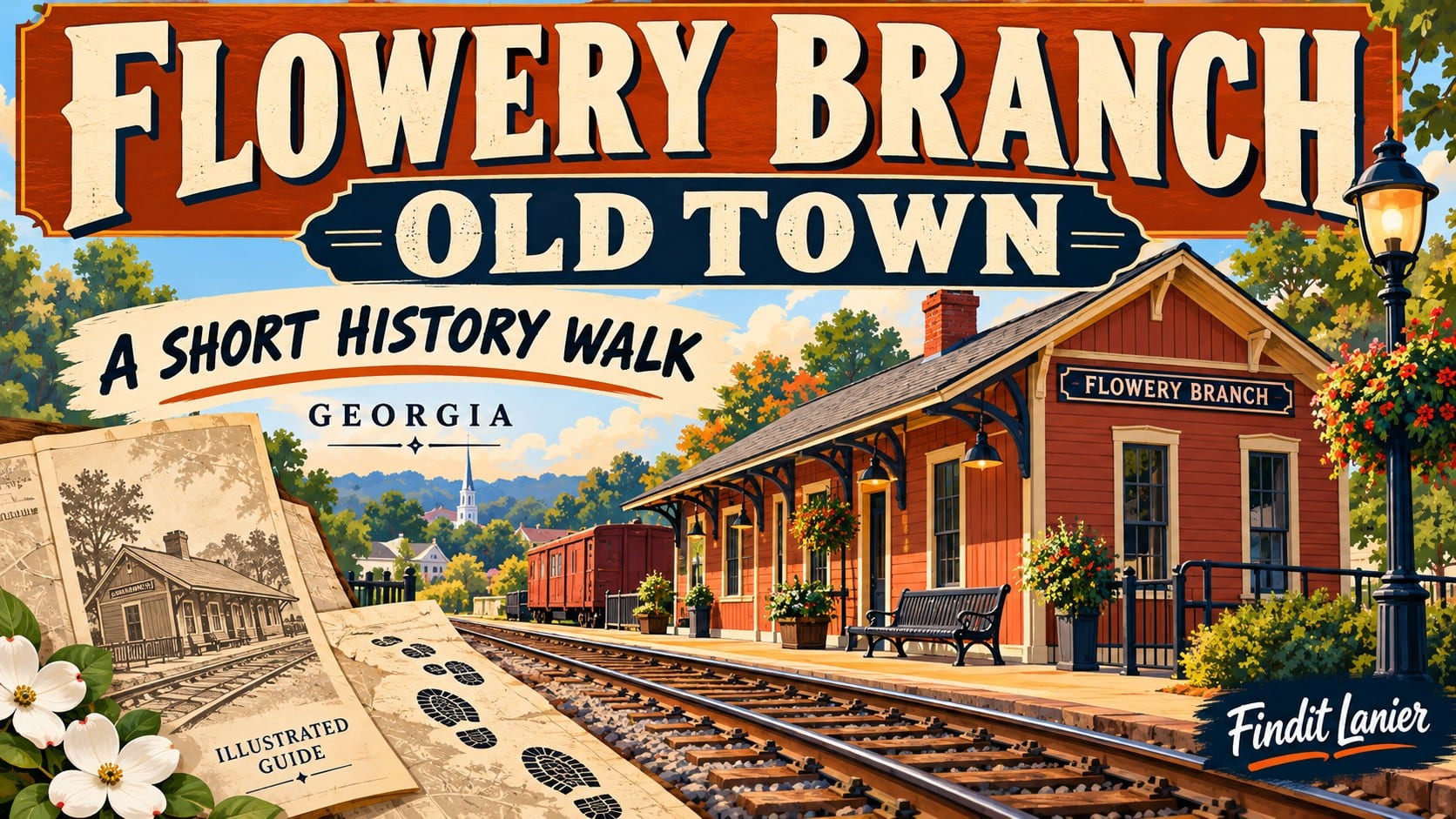
Flowery Branch Old Town: A Short History Walk Around the DepotRead the town’s railroad story before you arriveA short history walk in Flowery Branch can begin with a simple question: how did a railroad town become the Old Town people visit today? The depot and Main Street give that question a physical setting, without requiring a full-day itinerary or a booked museum tour.
The city’s history page says Flowery Branch was established in 1874, following the rail line that connected Charlotte and Atlanta. It describes the historic downtown’s rehabilitated and repurposed buildings and identifies the revitalized depot as part of Old Town’s story.
For more detail, the city-hosted Cotton Historic District walking brochure provides a numbered historical guide. It is dated 2008. Use it to understand the buildings and earlier uses, not as proof of today’s tenants, opening hours or admission arrangements.
The brochure places the depot at Railroad Avenue and Main Street and dates the building to 1901. That makes the area a useful focus for a first exterior look. Locate the public approach and signs on arrival, then decide how much of the surrounding street to explore.
Keep an exterior history walk separate from an interior visit. If entering the depot is essential, confirm current availability with the city before departure. A historic description of a building’s community use does not establish a daily visitor schedule. |
 Illustrative camera and Paris map; not a Flowery Branch map or tour. Photo by Dariusz Sankowski on Unsplash |
Compare the historical guide with what you seeChoose a few nearby points from the brochure rather than attempting every numbered stop. Read a description, locate the building from public space and compare visible features with the guide. A doorway, roofline or change in building use can be enough to start a conversation.
Ask children to notice one detail before telling them the answer. They might compare a storefront with a house, look for a date or explain why a railroad depot mattered to a town. Let the setting lead the questions instead of expecting them to remember a list of names.
Treat older occupant names and civic uses as part of the brochure’s historical record. Some labels describe what a building was used for when the guide was prepared. Do not turn those labels into directions to an office or business without checking current information.
The city’s Main Street Business Directory provides present-day businesses and contact links. If you want a coffee or meal stop, use the relevant business’s current information to check hours before making it central to the outing.
Stay on public walking areas and use marked crossings. A listed historic home is not an invitation to enter a yard or building. Choose a place to stop where others can pass, and keep the group together when consulting the guide. |
 Illustrative walking scene; not Flowery Branch Old Town. Photo by Ron Lach on Pexels |
Make the visit work for your groupSet a clear starting point and return plan before walking. Review parking signs when you arrive and avoid assuming an older brochure establishes today’s parking arrangements. If a specific access route is important, ask the city about the approach you intend to use.
Bring the guide in a form you can comfortably read outdoors. Check the small print before departure and identify a few stops together. This reduces time spent looking down at a phone while moving through a street crossing.
Take photographs from appropriate public places and distinguish your own observations from the brochure’s historical claims. If a detail does not match, note the question rather than inventing an explanation. A first walk can be the beginning of further local history research.
Our Braselton geography-walk guide offers another compact town outing, while our Gainesville history-center guide covers an indoor alternative. Sources were checked October 7, 2026. Use the older guide for context and current city information for the practical decisions that determine today’s visit. |
0 Comments
Join the conversation
Be the first to comment
Share your thoughts above.