
Prepare a focused first session with the Hall County local-history collection. |
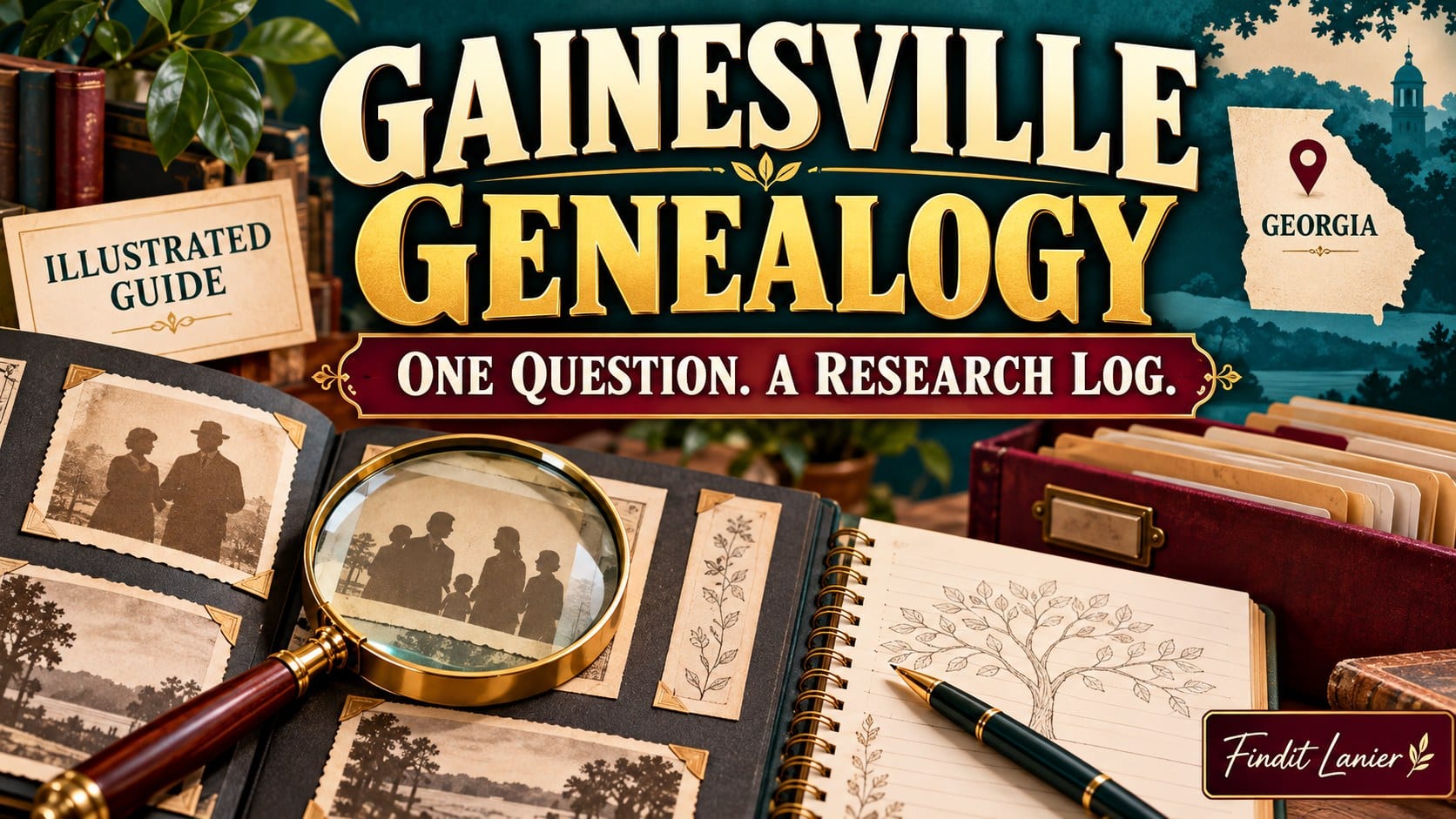
Gainesville Library Genealogy Visit: Bring One Question and a Research LogGive the first visit a focused purposeA family-history visit to Gainesville’s library can be more productive when it begins with one question. Instead of bringing a plan to trace every branch of a family in an afternoon, choose a person, place or period that you can describe clearly and identify what you already know.
Hall County Library’s genealogy resources page describes the Sybil Wood McRay Genealogy and Local History Collection. Its resources include Georgia records and histories, census microfilm and local newspaper material. The page also identifies online research options and links to historical Gainesville city directories.
Check the library’s current locations and hours page before leaving. Gainesville Headquarters is at 127 Main Street NW. Regular hours listed are Monday and Thursday, 10 a.m. to 8 p.m.; Tuesday and Wednesday, 10 a.m. to 6 p.m.; Friday and Saturday, 10 a.m. to 5 p.m.
Review the same page for holiday and staff-development closures. If your visit depends on a specific resource, assistance or equipment, ask the library beforehand. General opening hours do not promise that a particular research task can be completed during any walk-in visit.
Bring a compact outline: the name you are researching, approximate dates, the place involved and the source of each fact you already have. Note uncertainties explicitly. A remembered story and a dated record can both be useful starting points, but they should not be recorded as the same kind of evidence. |
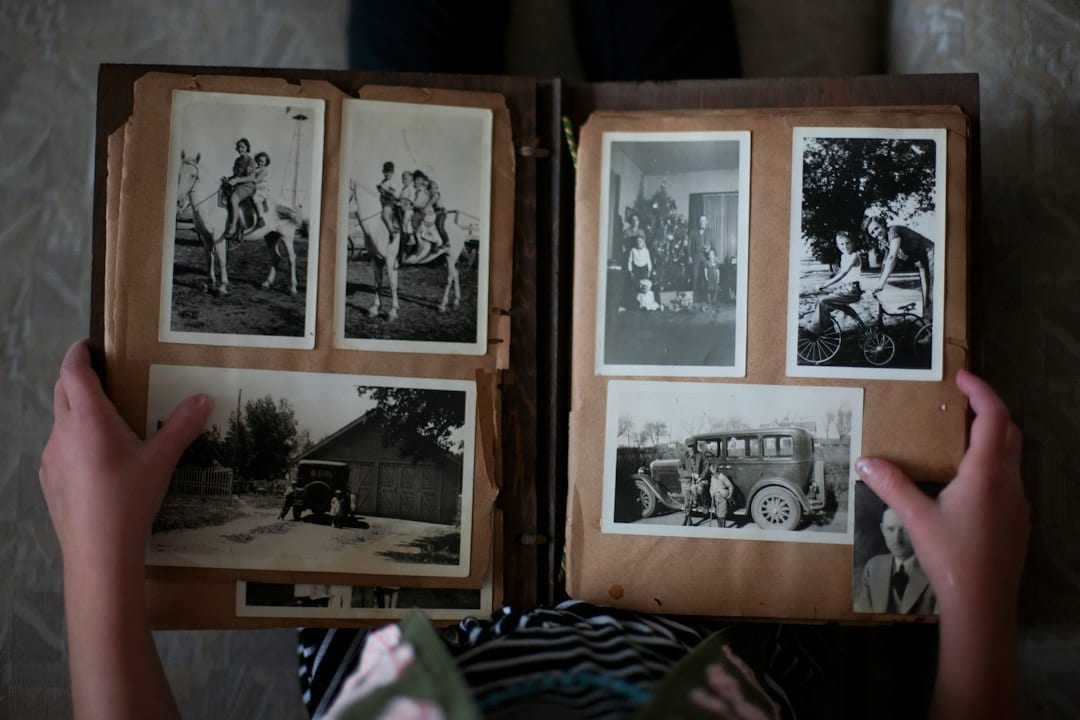 Illustrative family photographs; not the Hall County collection or an identified local family. Photo by Laura Fuhrman on Unsplash |
Choose sources that answer the questionTell staff the question rather than simply asking for everything about a surname. For example, you might want to find where a person lived during a particular period or investigate the history of a named business. That helps narrow the relevant resource without assuming a result exists.
The library’s resource description is a guide to possibilities, not a guarantee of complete coverage for every year or family. Check the range and format of the material you use. A missing entry may reflect the source’s scope rather than prove that a person was absent from the area.
Keep a research log as you work. Record the collection or publication title, the year, page or item reference and what you found. If you make a copy or save an image through an allowed method, preserve enough information to locate the original again.
Separate the wording of a record from your interpretation. A similar name, nearby address or matching occupation can be a clue, but a clue does not automatically identify the same person. Compare the details with other reliable information before merging them into a family story.
Ask about the terms of database access and copying before relying on a resource at home. The library page describes both remote and in-library options, with different access arrangements. Do not assume that every resource available in the building works identically outside it. |
 Illustrative research workspace; not a library database screenshot. Photo by Anete Lūsiņa on Unsplash |
Leave with a next step, not an invented conclusionReserve a few minutes at the end to review the log. Identify what the session established, what remains uncertain and which source you would examine next. An unanswered question with a well-documented search is still useful progress.
Keep personal documents organized and avoid leaving originals or private family notes at a public workstation. For a shared project, decide which findings the family wants circulated before posting copies or naming living relatives online.
If a historical photograph or directory entry raises a new question, follow that question in a later session. Trying to resolve every lead immediately can obscure the source trail that made the first discovery useful.
Our Gainesville history-center guide covers a different kind of local-history visit, while our Flowery Branch Old Town guide turns historical reading into an exterior walk. Sources were checked October 7, 2026. Bring one clear question, document the sources and let the evidence determine what you can say next. |
0 Comments
Join the conversation
Be the first to comment
Share your thoughts above.