
Confirm volunteer coverage, then connect a displayed object with the community around it. |
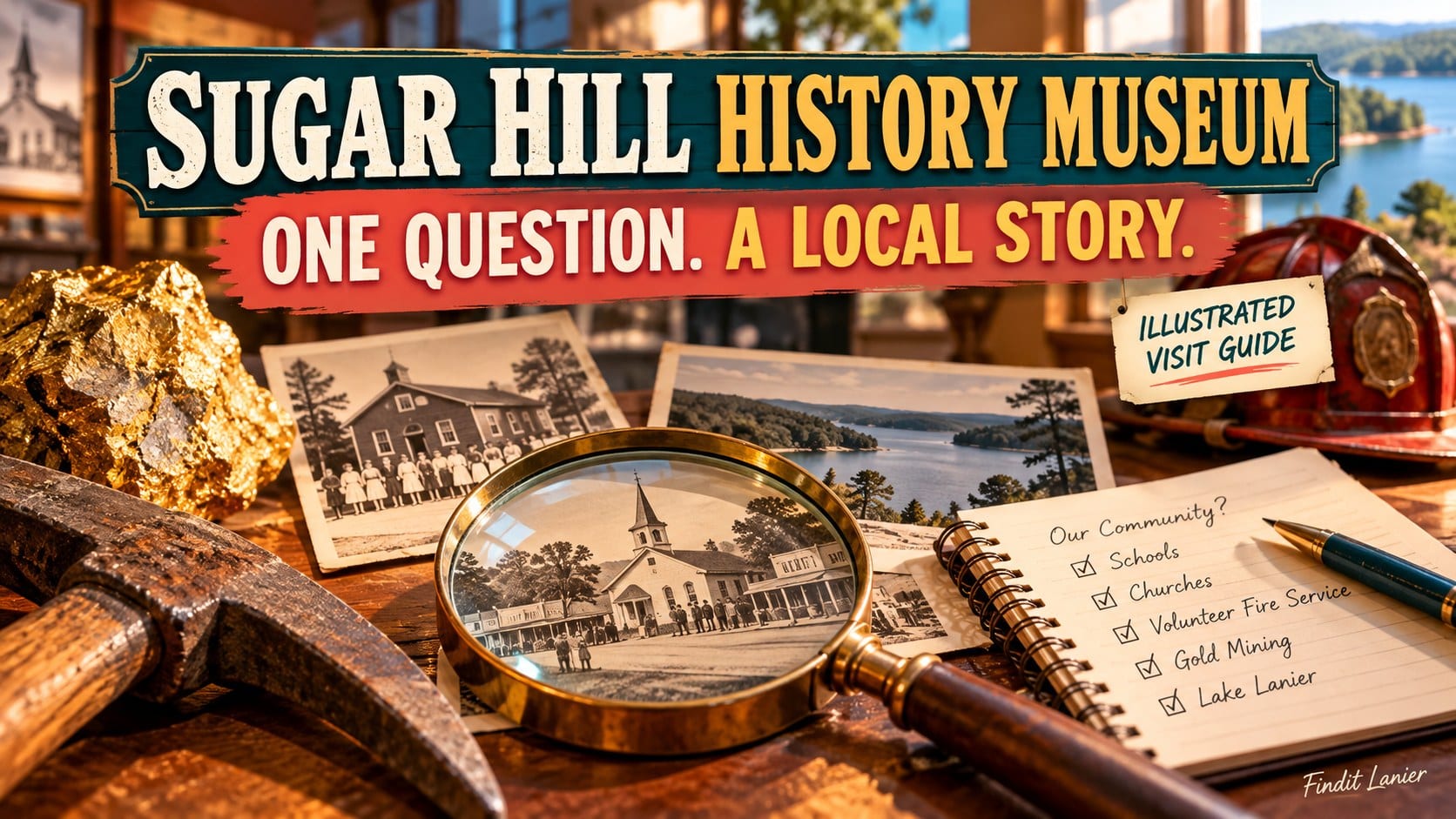
Sugar Hill History Museum: Plan a Short Visit Around One Local QuestionStart with a question close to homeA short local-history visit becomes more memorable when you arrive with something specific to notice. At the Sugar Hill History Museum, choose a question about a school, church, community service or the changing landscape. You do not need an elaborate itinerary to begin connecting the town’s past with the places around you.
The museum’s visitor page places it at 5010 West Broad Street in Sugar Hill. It lists Thursday through Sunday hours of 10 a.m. to 6 p.m., with Monday through Wednesday closed. Because volunteers mainly run the museum, the page asks visitors to call 678-541-6125 before arriving to confirm it is open.
Treat that call as part of planning, particularly if you are bringing children or making a special trip. Confirm the intended day and ask about anything your visit depends on, such as a particular display or assistance. Published hours provide a starting point, while volunteer coverage determines whether your planned visit can go ahead.
The museum describes exhibits covering churches, schools, the volunteer fire department, gold mining, moonshining and the community’s connection to Lake Lanier’s creation. Use that range to pick an initial topic. The description is not a promise that every historical question has a displayed answer. |
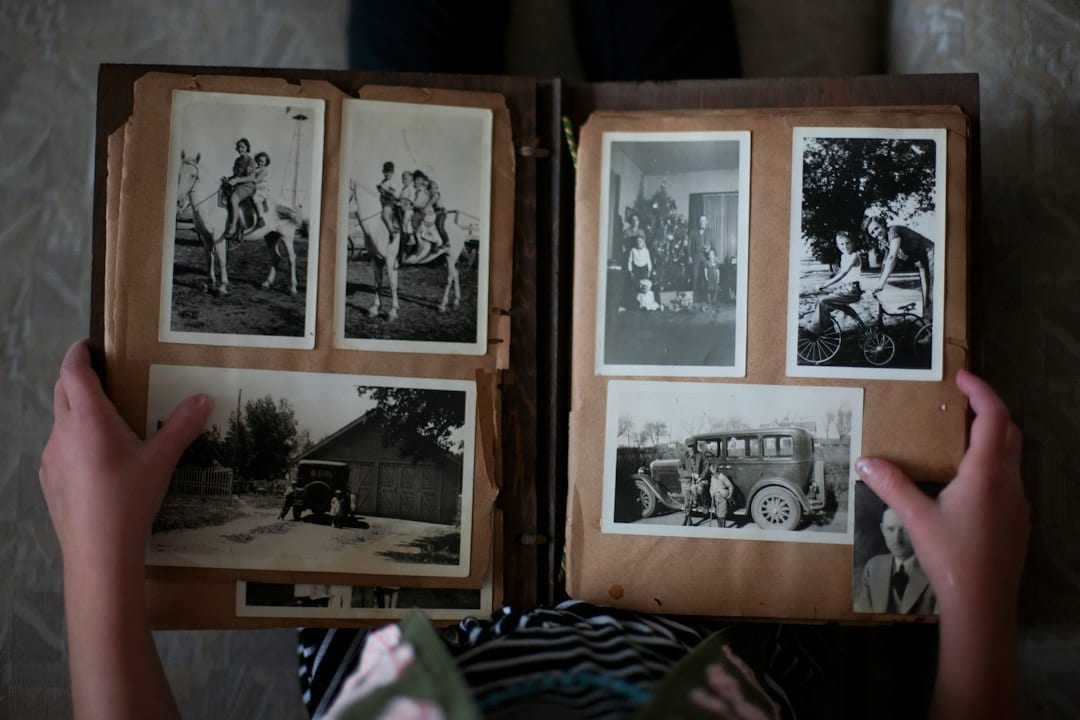 Illustrative historical family photographs; not objects from the Sugar Hill collection or an identified local family. Photo by Laura Fuhrman on Unsplash |
Let an object lead the conversationOnce inside, begin with a label and one object rather than trying to absorb every display immediately. What was it used for? Who would have handled it? Which details connect it to Sugar Hill? Read the available explanation before guessing at its meaning.
With children, ask each person to choose a detail they can describe in their own words. An unfamiliar tool or photograph can open a discussion about how work, school or communication changed. Keep the conversation grounded in what the exhibit says, and leave unanswered questions open.
If a volunteer is available, a focused question is easier to answer than a request for the town’s entire history. Ask how an object fits into the community’s story or which source might help you learn more later. Do not assume that a volunteer can identify every person in a photograph or date an object on sight.
The Historic Preservation Society’s background page explains its preservation purpose and ways the organization brings people together around local history. That gives context to the work behind a museum visit: collecting, interpreting and caring for community material takes continuing attention.
Ask before photographing displays, and follow the museum’s instructions about handling objects. A careful note about the label and subject can preserve a useful lead even when you do not take a picture. Record the difference between an exhibit statement and your own interpretation. |
 Illustrative note-taking workspace; not a photograph of the museum’s research facilities. Photo by Anete Lūsiņa on Unsplash |
Connect the visit with the townLeave with one connection you can explain: a service that grew with the community, a place name you understand more clearly or a question worth following. A brief visit does not need to produce a complete history lesson to be worthwhile.
Our Sugar Hill Greenway starting-point guide covers a separate outdoor outing nearby. Use it to plan a walk on its own terms; the museum’s opening schedule does not describe trail access or conditions.
For another small-town history experience, our Flowery Branch Old Town guide suggests an exterior walk informed by historical material. Comparing two communities can be interesting, but keep each place’s dates and sources separate.
Sources were checked October 7, 2026. Confirm museum coverage before traveling, choose a manageable question and let the displayed evidence guide the conversation. The credited stock photographs illustrate museums and historical research; they do not depict Sugar Hill’s collection. |
0 Comments
Join the conversation
Be the first to comment
Share your thoughts above.